
What Is a Stock Photo? Definition, Licenses, Costs, and Usage Explained
A stock photo is a pre-produced image created without a specific commission and licensed through agencies like Adobe Stock, Shutterstock, or iStock. You never buy the photo itself — you buy a usage right: permission to place the image on your website, in advertising, or in print. The name comes from the English word “stock,” as in inventory: the images sit ready “in stock,” waiting for buyers.
Key Takeaways
- A stock photo is a finished, professionally produced image anyone can use for a license fee — copyright stays with the photographer.
- “Royalty-free” does not mean free of charge. It means: pay once, then use without further fees.
- Standard images cost between $0.20 and $20, extended licenses $50 to $150, and classic macrostock images run into the hundreds.
- Even free images from Unsplash or Pixabay come with license terms — and carry a higher legal risk than paid ones.
- Almost always off-limits: stock photos in logos, editorial images in advertising, use in sensitive contexts without clearance.
- AI-generated stock photos are growing fast but raise new copyright questions.
What Exactly Is a Stock Photo?
A stock photo is a picture a photographer took not for a specific client, but on spec — for an archive that any number of buyers can draw from later. The term comes from “stock,” the English word for inventory: these are images that already sit “in stock.”
The concept is old. Agencies began selling stock photos back in the early 1920s — often leftover frames from commercial shoots that would otherwise have gathered dust in a drawer. By the 1980s, this had grown into its own industry, with photographers producing exclusively for image archives.
Today the term covers far more than photos. Image agencies also carry vector graphics, illustrations, videos, and audio files. The core principle stays the same: finished material, instantly available, usable for a license fee. You skip the shoot — model, location, retouching included — and pay a fraction of what a commissioned photographer would cost.
One important difference from a regular photo: with an ordinary picture, the usage rights sit exclusively with the photographer. A stock photo is deliberately licensed so that anyone who buys a license may use it. Exclusivity isn’t part of the standard deal — the same image can show up on your competitor’s website in parallel.
How Does Stock Photography Work?
The process has three parties: photographer, agency, buyer.
Photographers upload their images to an agency. The agency checks quality, keywording, and rights — for instance, whether a model release exists for the people shown. Accepted images land in a searchable catalog. When someone buys a license, the agency and the photographer split the revenue. For photographers, this creates an ongoing income stream of small royalty payments. A single download pays a few cents to a few dollars, but a good image sells hundreds of times.
Within the industry there are two price worlds. Classic macrostock agencies charge several hundred to several thousand US dollars per image, while microstock images sell for as little as $0.25. Microstock — the model behind Shutterstock, iStock, and the rest — bets on volume instead of exclusivity. One number shows how big this business became: iStockphoto founder Bruce Livingstone sold his platform to Getty Images in 2006 for $50 million.
For you as a buyer, the whole process takes minutes: type a search term, pick an image, choose a license, download. Most platforms show watermarked previews first, so you can test the image in your layout before paying.
How a Stock Photo Reaches Your Website
Five steps from camera (or generator) to license
Upload
Photographer submits images on spec.
Review
Agency checks quality, keywords, releases.
Catalog
Accepted images become searchable.
License
Buyer pays for a defined usage right.
Use
Website, ads, print — per the terms.
Revenue from every license is split between agency and photographer — typically 15–45% goes to the creator.
What License Types Exist for Stock Photos?
The license decides what you may do with the image. Five models are worth knowing:
- Royalty-Free (RF): The standard on almost every major platform. You pay once and may use the photo multiple times within the terms, with no additional fees. Unlimited in time, across several media — but never exclusive.
- Rights-Managed (RM): Here the price depends on usage duration, purpose, print run, and size — every use is licensed individually. In return, exclusivity deals are possible: for a surcharge, nobody else uses the image.
- Extended license: Required as soon as the image becomes part of a product you sell — postcards, t-shirts, or templates you resell. Standard licenses do not cover that.
- Editorial: Images cleared only for editorial use may appear exclusively in magazines, newspapers, blogs, and other non-promotional channels. In brochures or any commercial media they are off-limits. The reason: no releases exist for the people and brands shown.
- Creative Commons & Public Domain: CC licenses allow use under conditions — CC BY requires attribution, CC BY-NC excludes commercial use. Public-domain images are fully free, for example because the creator has been dead for more than 70 years or deliberately waived all rights.
One point applies to every model equally: with the purchase, you acquire nothing but a usage license — and license agreements can define that usage very differently. The copyright itself never changes hands.
| License | Payment model | Commercial use | Exclusive |
|---|---|---|---|
| Royalty-Free | Pay once, use repeatedly | Yes, within terms | Never |
| Rights-Managed | Per use: duration, run, size | Yes, per agreement | Possible, for a surcharge |
| Extended | One-time, higher fee | Yes, incl. resale products | No |
| Editorial | Pay once | No — editorial only | No |
| CC / Public Domain | Free, conditions vary | Depends (CC BY-NC: no) | No |
Copyright never transfers — every model above grants usage rights only.
What Does “Royalty-Free” Mean — and Why It Isn’t Free
Few terms cause as much confusion. “Royalty-free” sounds like gratis. It isn’t.
The German translation “lizenzfrei” (“license-free”) is essentially a translation error — the original agency term is “royalty-free.” It means: no further license fees (royalties) fall due when you later use the image. The alternative would be absurd anyway: if you had to pay per page view, every website image would be an accounting nightmare.
Trade bodies warn about exactly this misunderstanding on a regular basis: “royalty-free” means a one-time usage fee is generally due. In return, the image can be used commercially without time limit, repeatedly, and across different media — but there are no exclusive rights, and others can acquire the very same usage rights.
Remember it as a rule of thumb: an image license is a restriction. “Royalty-free” means that after the one-time payment, hardly any restrictions remain — not that no payment was due. And even then, limits still apply, such as the logo ban or print-run caps (many standard licenses end at 500,000 copies).
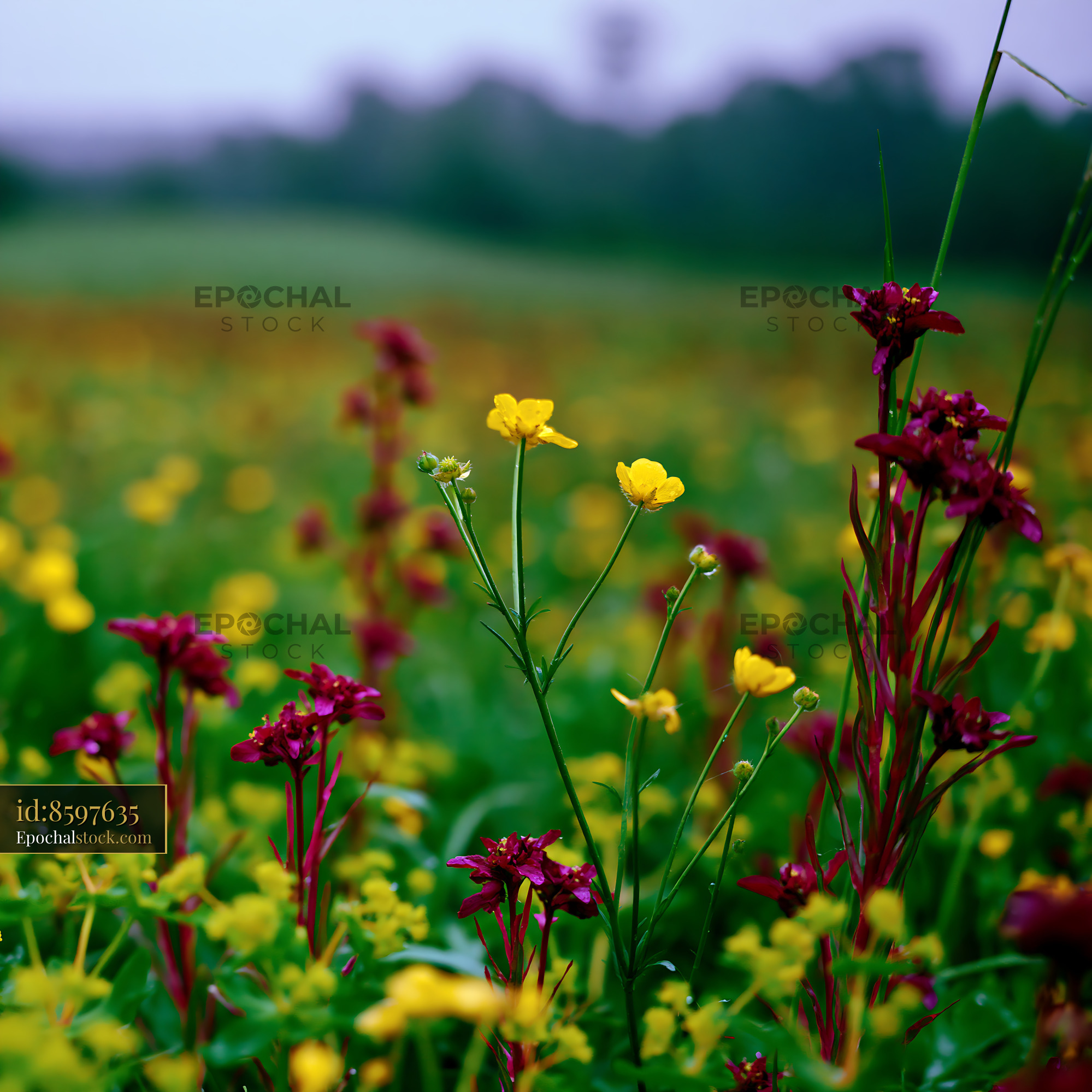
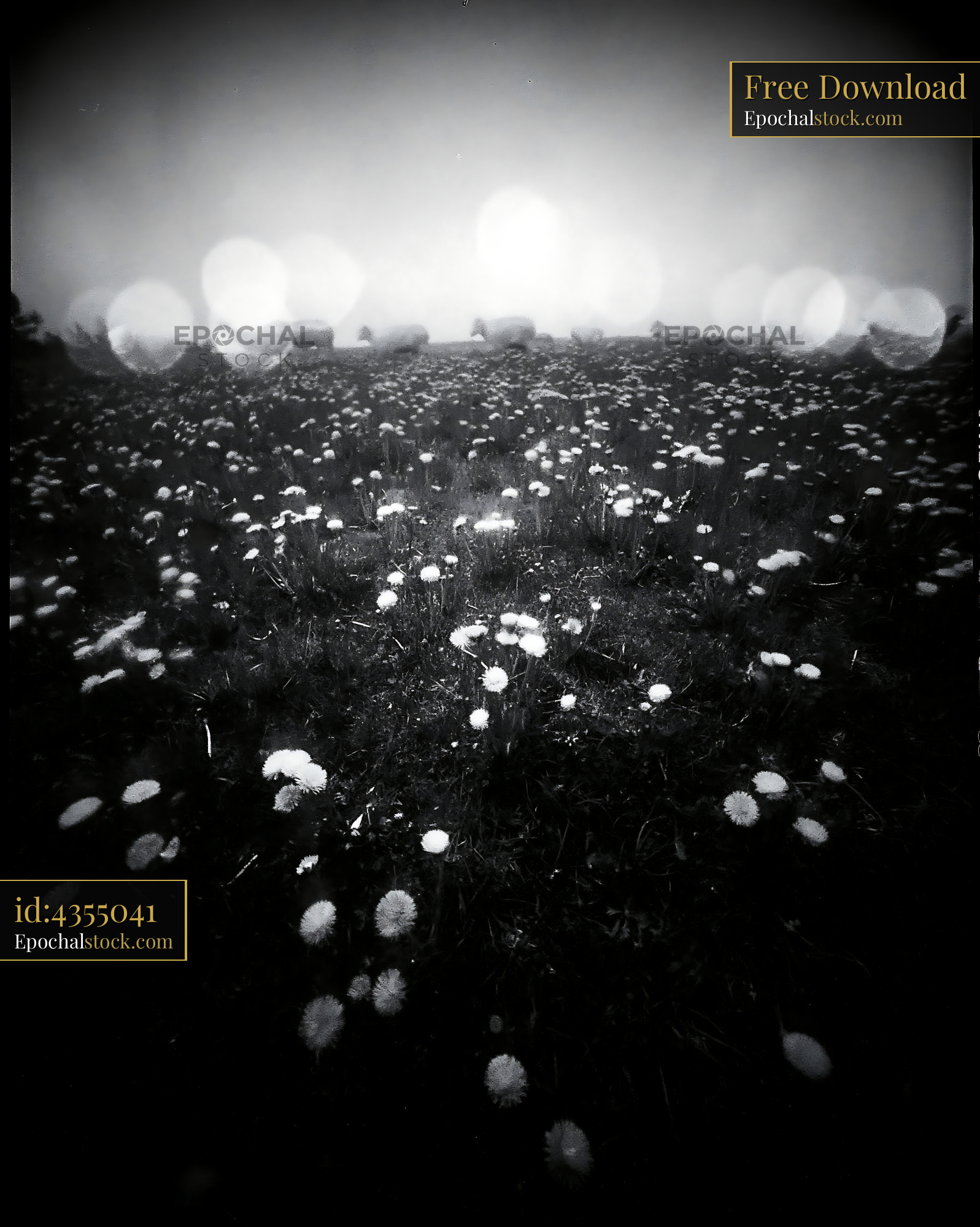
 Yarrow Blooming in Meadow With Bee Flying
 Violet Blooming Under Soft Light in Meadow
How Much Do Stock Photos Cost?
The price range is enormous — from 20 cents to four figures. The concrete numbers:
Royalty-free stock photos cost between $0.20 and $20 per image, depending on purchase model and platform. Premium images sit at $30 to $500 and up, extended licenses at $50 to $150 per image. At the upper end sit ultra-high-resolution files: premium 60MP stock photos license for around $250 apiece. Subscriptions average $20 to $200 per month for 10 to 750 downloads.
What you pay per image depends mostly on how you buy. Single purchases via credits are the most expensive, subscriptions the cheapest: at Shutterstock, image subscriptions start at $29 per month for ten images — with large packages, the per-download price drops to as little as $0.26.
For comparison, look at the alternative: a professional photographer for a custom shoot usually costs several hundred dollars or more. For standard motifs — office scene, laptop, coffee cup — stock almost always pays off. For images meant to carry your brand (team, products, spaces), the photographer remains the better choice. A $5 image that also hangs on three competitors’ sites ends up more expensive than it looks.
Free vs. Paid Stock Photos: What’s the Difference?
Alongside the paid agencies exists a second world: free platforms like Unsplash, Pexels, and Pixabay. Millions of images, zero dollars, commercial use allowed. Sounds like the obvious choice. There are three catches.
First, legal certainty. Images on free platforms receive little to no copyright vetting — the effort would be too high. That makes commercial use of this material genuinely risky. If someone uploads a stranger’s photo, you as the user are the one liable in case of doubt. Paid providers, by contrast, usually include a kind of insurance with their products — iStock and Shutterstock offer legal protection into six-figure amounts.
Second, uniqueness. Free catalogs are smaller and used by everyone. You now recognize the same ten Unsplash laptop shots on every second startup website.
Third, missing releases. Model and property releases are often undocumented on free platforms. For advertising with recognizable people, that’s a real problem.
For a private blog, free images are usually enough. As soon as money is involved — company website, ads, packaging — the few dollars for a license mainly buy you one thing: a verified chain of rights.
What Can You Do With Stock Photos — and What’s Off-Limits?
The standard license covers a lot: websites, blog articles, social media posts, presentations, newsletters, flyers. Yet this is where most people burn their fingers, because “cleared for commercial use” only means the image may be used for a one-time license fee — not that it can be used without restriction.
The most common no-go zones:
- Logos and trademarks: For a company logo you need full ownership rights to the image — stock platforms grant usage rights only. Stock images are therefore ruled out for logos, period.
- Sensitive topics: Use of images for topics like religion, politics, medication, tobacco, or alcohol is restricted or only allowed under specific conditions — models shown in the pictures must not end up in defamatory contexts.
- Editorial in advertising: Editorial images without model releases have no place in ads.
- Passing licenses on: Your license is yours. An agency may use licensed images for client projects, but may not simply hand the files over to the client.
And one widespread misconception keeps costing people money: it is a false assumption that private use requires no license. Even a hobby blog needs a valid one — otherwise cease-and-desist letters and damages loom. One documented case from Germany shows how long the risk lives: a web designer used a flag image cleared only for editorial use — the legal warning arrived ten years later.
A practical tip: archive the license, purchase date, agency, and invoice for every image you use, all in one central place. If a dispute ever comes, that record is your only defense.
AI Stock Photos: The New Generation
The newest shift in the industry is happening right now: AI-generated stock images. Platforms like Adobe Stock (with Firefly) and Shutterstock have built their own generators, and alongside them, dedicated providers are emerging whose entire catalogs consist of AI-generated stock images.
The appeal is easy to see: no model, no release problem with fictional people, images that match your brief exactly instead of compromise picks, and prices that undercut classic subscriptions. At Shutterstock, AI-generated downloads come with a standard license that permits commercial use and adds protection against copyright claims.
Legally, though, the ground is thinner than with classic photos. Unlike traditional photography, AI images have no human author in the usual sense — which raises the question of whether such images enjoy copyright protection at all. Some providers explicitly release generated content freely; others tie usage to their own license terms. For you that means: read the platform’s license text, don’t guess. In the US, AI images without human creative input may not be copyrightable at all — the platforms grant commercial usage licenses regardless.
Transparency has become part of good practice: serious AI stock providers label their images as AI-generated, and anyone using such images editorially should disclose it as well.
From the Composition collection
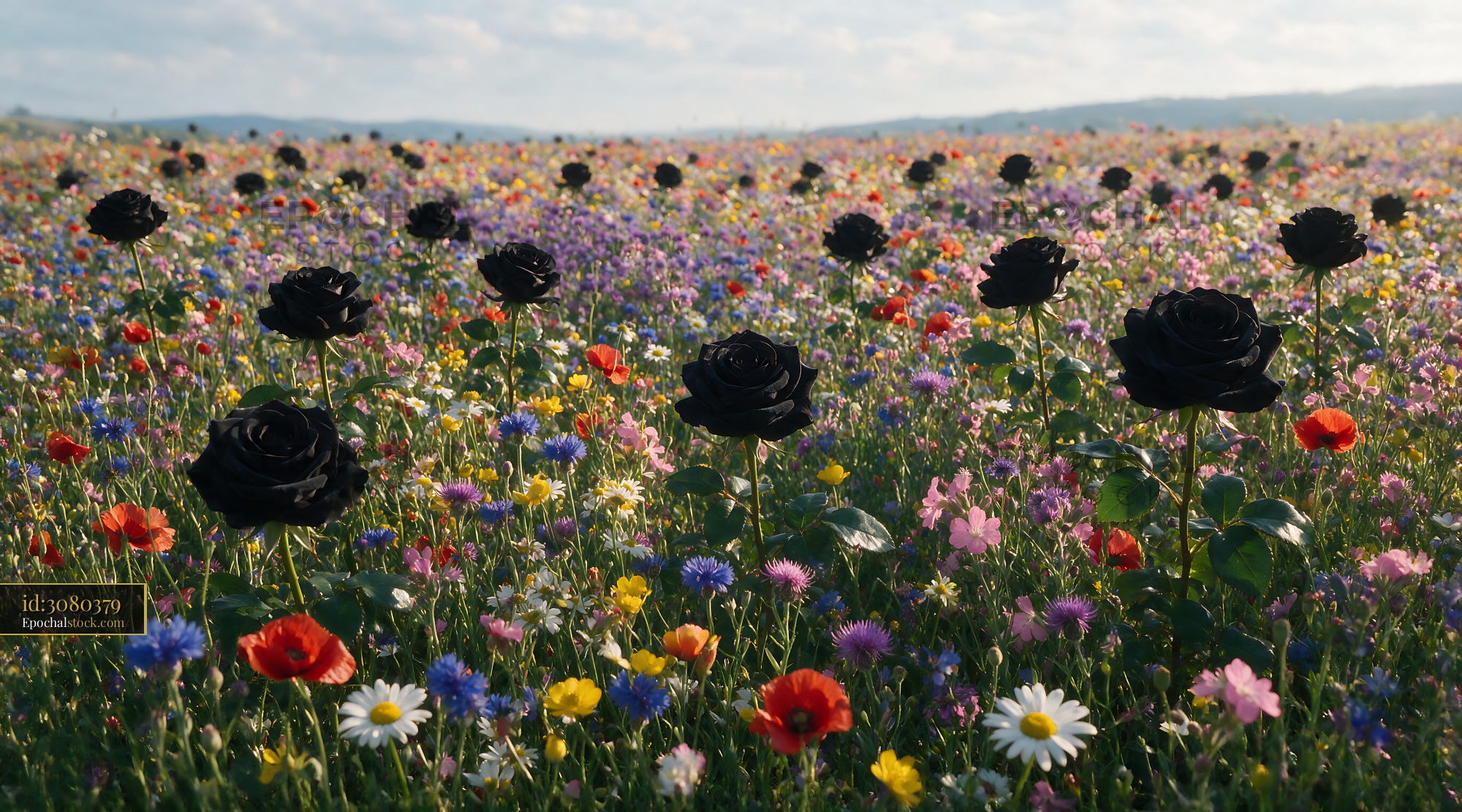
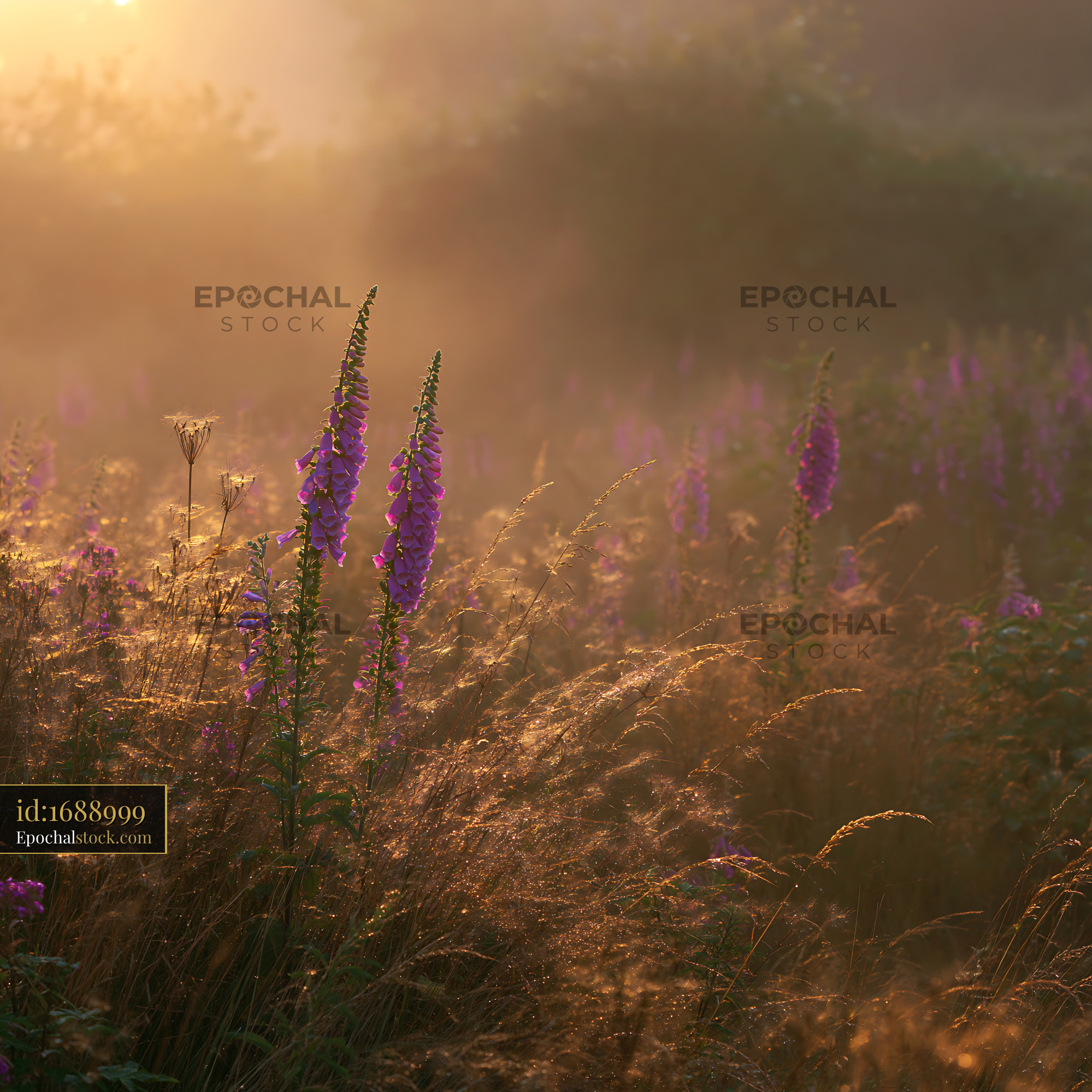
Every image on this page is AI-generated stock from Epochal Stock — motifs like black roses in a summer meadow exist only because no camera was involved. Labeled as such, they are exactly the new generation this section describes.
Browse the Composition collectionFAQ: Common Questions About Stock Photos
Can you make money with stock photos?
Yes. Photographers upload images to agencies and receive a share of every license sold, usually 15 to 45 percent. Hardly anyone gets rich this way: a single download often pays cents. But contributors who regularly deliver in-demand motifs build a passive side income over time.
How do you recognize a stock photo?
By its perfection. Flawless models, generic office scenes, interchangeable motifs with no sense of place — and the same face appearing in different roles on several websites. A reverse image search (Google Lens, TinEye) shows within seconds whether a picture comes from a stock catalog.
What is the difference between a stock photo and a regular photo?
A regular photo is made on commission or privately, and the rights sit exclusively with the photographer or client. A stock photo is produced on spec and deliberately licensed so many different buyers can use it in parallel — for a fee, without exclusivity.
Can I use stock photos on social media?
Usually yes, under the standard license. But the rules differ by provider, especially for paid ads and influencer marketing — that no longer counts as private use. Check the platform’s license terms before putting an image into paid campaigns.
Can I use a stock photo as a logo?
No. A logo must be protectable as a trademark, and for that you need exclusive ownership of the image. Stock licenses transfer usage rights only — the same motif could appear in another company’s logo tomorrow. Every major agency explicitly excludes logo use.
How long have stock photos existed?
Around 100 years. The first agencies sold leftover images from advertising shoots in the 1920s. Stock became a mass market from the 2000s onward through microstock platforms like iStockphoto, which pushed prices from several hundred dollars down to a few cents per image.
The Bottom Line
A stock photo is purchased time: a finished, professional image for a fraction of the cost of a shoot. The deal comes with two conditions you need to know. You never acquire the image, only a usage right — and “royalty-free” describes the payment model, not the price. Understand the license types, respect the no-go zones (logos, editorial, sensitive topics), and archive your license records, and you can use stock photos without risk. For everything that should make your brand unmistakable, your own imagery remains the first choice.