A congregation doesn’t grow firm in its faith through a single program. It grows firm through the four things that shaped the very first church: teaching, fellowship, breaking bread, and prayer (Acts 2:42). In practice today, that means regular small groups where faith gets personal, a worship service people help shape instead of merely attend, real tasks for volunteers, and communication that keeps faith visible between Sundays. This article walks through all eight fields. Concretely, and in an order you can act on.
Key takeaways:
- Faith grows in relationships, not in administration. Small groups do more than big events.
- Worship stays the center. Everything else should flow out of it and lead back to it.
- Volunteers stay when they get a clear, limited task. Not when you appeal to their guilt.
- Visibility is part of building a congregation: the newsletter, the notice board, and the website are spiritual tools, not chores.
- Shrinking numbers are no reason to give up. Small congregations can be spiritually denser than large ones.
Why Faith Needs Community
Nobody believes alone for long. That’s not a pious slogan; it’s observable. Whoever hears one sermon on Sunday and then sees no one from church for eleven days turns faith into a private matter. And private matters lose to the calendar almost every time.
Acts 2:42 describes what held the first Christians together: the apostles’ teaching, fellowship, the breaking of bread, and prayer. Four elements. No building program. No structural reform. If you want to strengthen your congregation, that verse is the test for every idea on the table: does it feed one of those four? If not, it can wait.
This forces an uncomfortable reversal. Many congregations pour most of their energy into organization: committees, buildings, schedules. The members’ faith is supposed to grow along the way somehow. It doesn’t. Spiritual growth needs vessels of its own, and the following sections describe the ones that have held up in practice.
How Worship and Prayer Become the Center Again
The worship service is the only place where the whole congregation gathers regularly. If people experience it as an obligation, that feeling bleeds into everything else.
Three levers have proven themselves. First: participation. Let members take on readings, write the intercessions, tell their own faith stories. A two-minute honest testimony (“I prayed in the hospital, and something shifted”) moves a congregation more than many a polished sermon. It shows that faith is being lived here and now, not just proclaimed.
Second: prayer beyond Sunday. A weekly prayer circle of five people sounds unremarkable. But praying together carries differently than praying alone. Anyone who has experienced a group praying for their specific situation comes back. Start small: 30 minutes, a fixed weekday, an open door.
Third: keep the connections. Every group and circle in the congregation should visibly flow out of the worship service and lead back into it. Where youth work, the seniors’ circle, and the choir run side by side without touching, the congregation splinters into milieus under one steeple.

Small Groups: The Root System of a Congregation
If one single instrument reliably strengthens a congregation’s faith, it’s the small group. Home groups get called the seed cells of living congregations for a reason. Eight people in a living room, one Bible passage, real questions. What happens there can’t happen in a service with 80 attendees: people say out loud what they doubt. And doubts that may be spoken don’t destroy faith. Silenced ones do.
Getting started rarely fails for lack of interest. It fails at the threshold. So make the first step as small as possible. No annual concept, no sign-up sheet on the notice board. Instead: ask two or three people personally, limit the commitment to six evenings (“we’ll read the Gospel of Mark together, then decide whether to continue”), and use material that asks questions rather than dictating answers.
The mix matters. A home group made up entirely of council members turns into a staff meeting. Deliberately invite people at the edge of the congregation, confirmation parents for instance, who have only shown up for festivals in years. For many of them, a living room is a lower threshold than a church hall.
Week 1 · Ask
Invite two or three people personally. No open call, no sign-up sheet.
Week 2 · Frame
Agree on six evenings and one book: the Gospel of Mark. Decision about continuing comes later.
Week 3 · First evening
One chapter, three questions, no lecture. Doubts are allowed on the table.
Weeks 4–5 · Hand over
Let members host and pick the passage. Ownership grows faster than attendance.
Week 6 · Decide together
Continue, split into two groups, or pause. All three outcomes are wins.
Connecting Generations Instead of Managing Them
Many congregations have a program for every age group, and still the generations don’t know each other. Children’s church at 10, seniors on Tuesday, youth on Friday. Three parallel worlds under one steeple.
Yet it’s precisely the encounter between generations that firms up faith on both sides. A 78-year-old telling a confirmand how she was baptized in 1962 and what her faith carried her through while nursing her husband transmits more credibility than any curriculum. And the older members experience, through the questions of the young, that their faith is in demand. Literally asked for.
Formats that work: mentorships pairing seniors with confirmands for the whole confirmation year. One intergenerational service per quarter, prepared jointly by young and old. Children’s Bible days with grandparents as storytellers. A parish festival where the youth design the program for the seniors, not the other way around.
One note from practice: start with one format, not four. A mentorship project that works breeds imitation. Four half-hearted projects breed exhaustion.
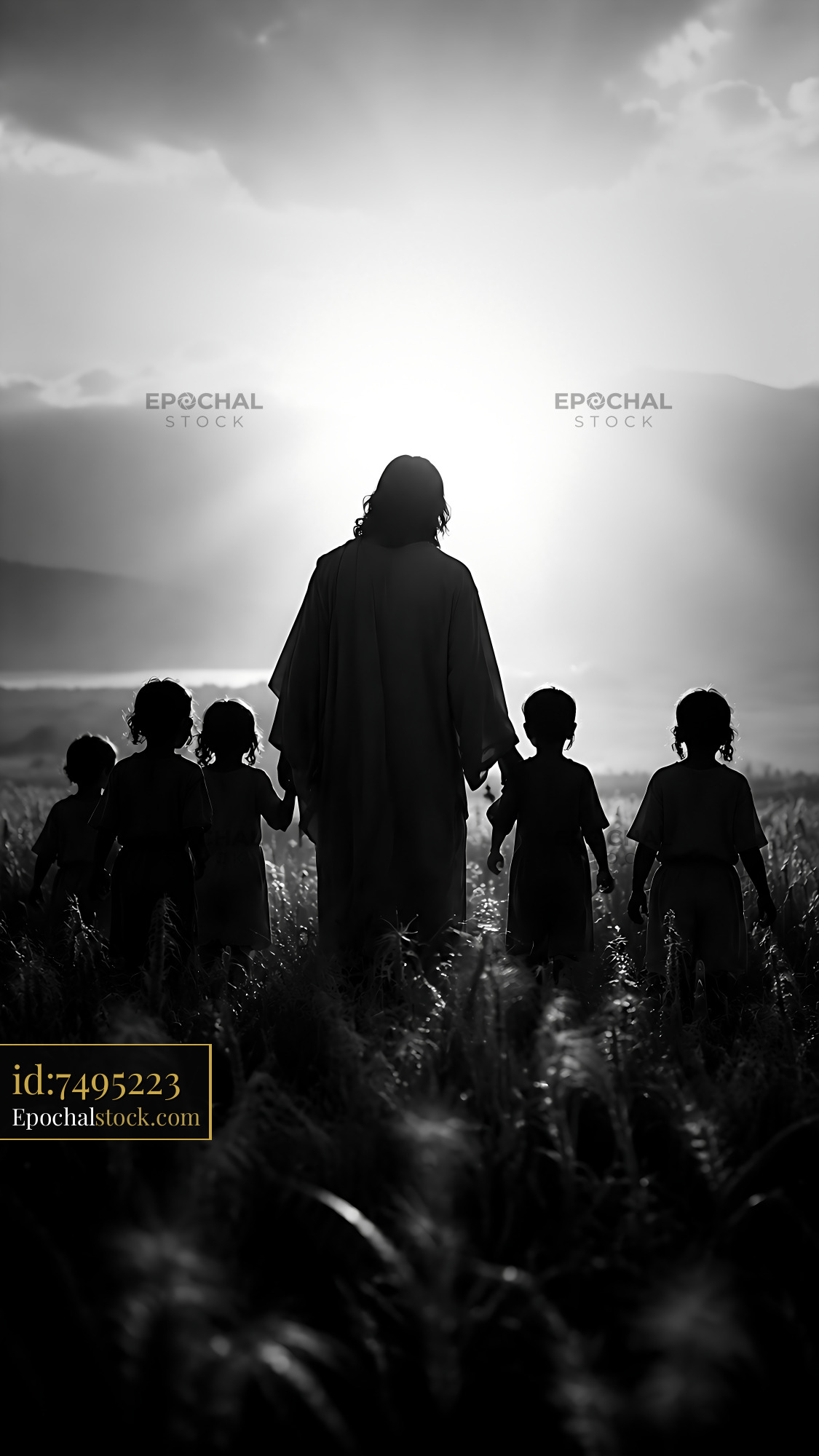 Jesus Walks With Children Through a Field Toward the Light
 Jesus Smiles With Children in Simple Clothing at Home Setting
Volunteers: Give People Tasks They Can Actually Carry
No volunteers, no congregational life. Every parish knows this. And yet almost everywhere the same mistake gets made when recruiting: the appeal to guilt. “We urgently need someone for…” works exactly once, and the person who answers it is burned out two years later.
What carries instead: tasks with clear edges. Someone asked “Can you run the cake stand at the festival from 2 to 4?” says yes far more readily than someone asked “Would you join the festival committee?” Limited commitments get kept. More importantly, they get repeated. Gladly. This year’s cake stand becomes next year’s co-organizing. Voluntarily.
Second: gifts before gaps. Don’t ask “what’s missing?” first. Ask “what can this person do, and where do they come alive?” A carpenter who builds the nativity scene, an IT person who maintains the website, a kindergarten teacher in children’s church: whoever serves from their strength experiences the service itself as faith-building. Which is the whole point.
And third: make gratitude visible. Not as a formula at year’s end, but concretely. A photo of the team in the newsletter, a name spoken in the service, a shared meal. People stay engaged where their contribution is seen.
The appeal
“We urgently need someone…”
- Open-ended commitment, no exit in sight
- Answered out of guilt, not gifting
- One overloaded volunteer carries it all
- Quiet resignation after about two years
The task
“Cake stand, 2 to 4 pm — can you?”
- Clear edges: time, place, end point
- Matched to what the person is good at
- Gets repeated voluntarily next year
- Grows into co-organizing, on their terms
Testimony and Service: Faith That Works Outward Grows Firm Inward
It sounds like a paradox, but it holds: a congregation that circles around itself loses faith-power. One that serves gains it.
The mechanism is simple. Whoever hands out groceries to people in need week after week, helps refugees decode official letters, or visits the sick experiences their own faith as effective. Not as theory. No sermon can substitute for that experience. Diakonia isn’t a side branch of parish work; it’s faith formation by other means.
Telling works the same way. Give people in the congregation regular room to report concrete experiences of faith: in the service, in the newsletter, in the small group. A testimony doesn’t have to be spectacular. “After my wife died I kept praying, even though I was angry at God.” Sentences like that give others permission to live their own faith honestly. And honest faith is firm faith.
Practically: pick one diaconal project that fits your congregation and stays sustainable. A monthly parish café for people living alone beats an overambitious campaign that falls asleep after a year.
Staying Visible: Newsletter, Notice Board, Website — and the Image Problem
Between two Sundays lies a week in which the congregation is invisible to most of its members. That gap is exactly what the parish newsletter, the notice board, the website, and (where capacity exists) social media are for. This isn’t image polishing; it’s congregation building. Whoever wants to strengthen people’s faith has to reach them, including the ones who don’t come every Sunday. The newsletter is the congregation’s calling card, and it lands in mailboxes no pastor ever reaches.
Here’s where most congregations stumble, and rarely over the text. They stumble over the images. Nobody reads a wall of print; pictures create attention and steer it toward the content. But where to get them? Your own photos from the parish festival immediately raise personality-rights and GDPR questions: every recognizable member would have to consent, and for children, the parents. Copying pictures “from the internet” violates copyright almost every time, and cease-and-desist letters hit church congregations too. And a photographer? The newsletter team usually doesn’t have one.
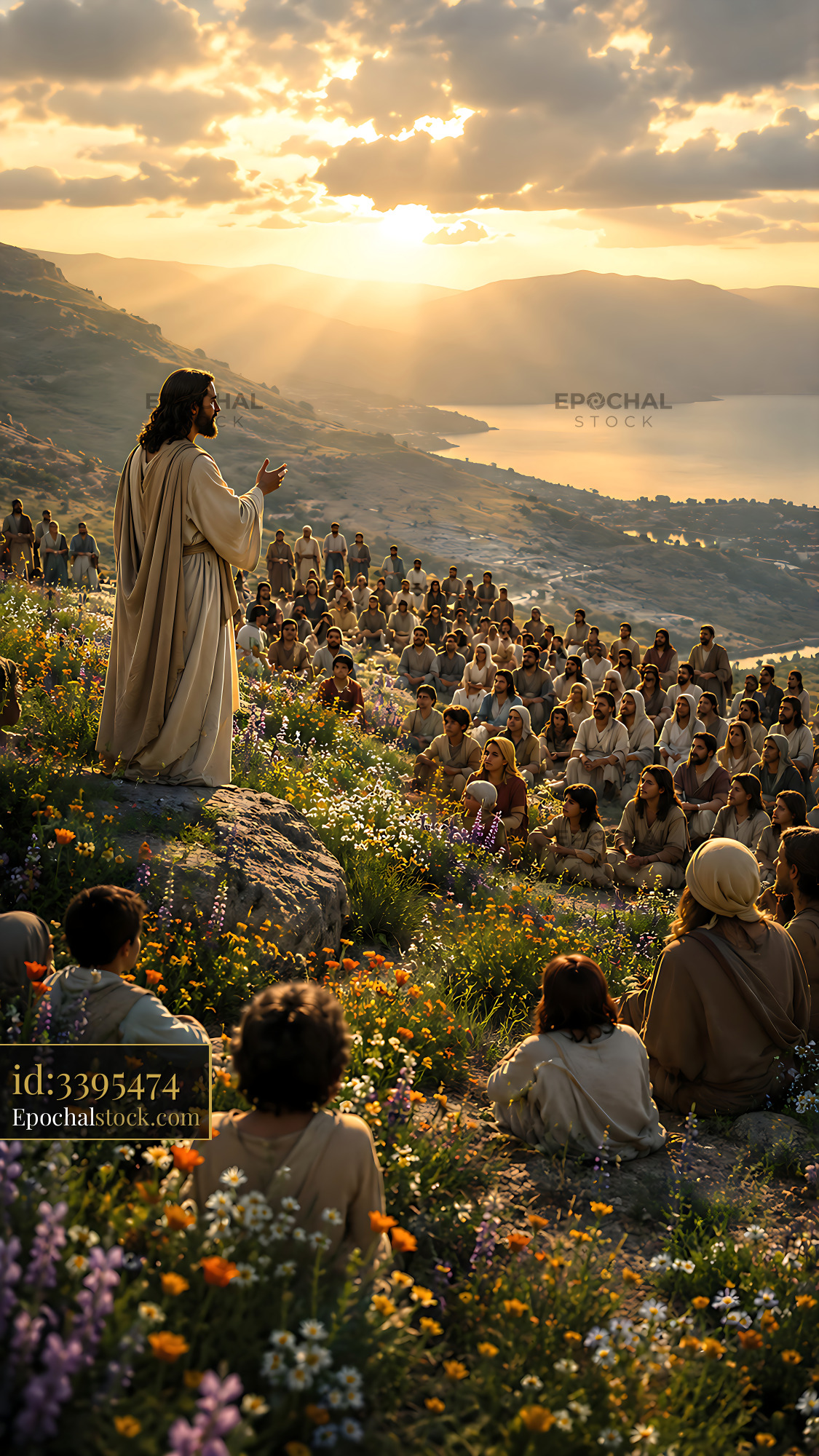
The workable answer is licence-clear stock imagery. AI-generated collections hold one advantage that matters enormously for congregations: no real people are depicted, so personality rights and consent forms drop away entirely. For biblical and faith motifs specifically, the AI-generated stock images on Epochal Stock cover most of what a newsletter, a sermon slide, or a website header needs, and the free tier costs nothing.
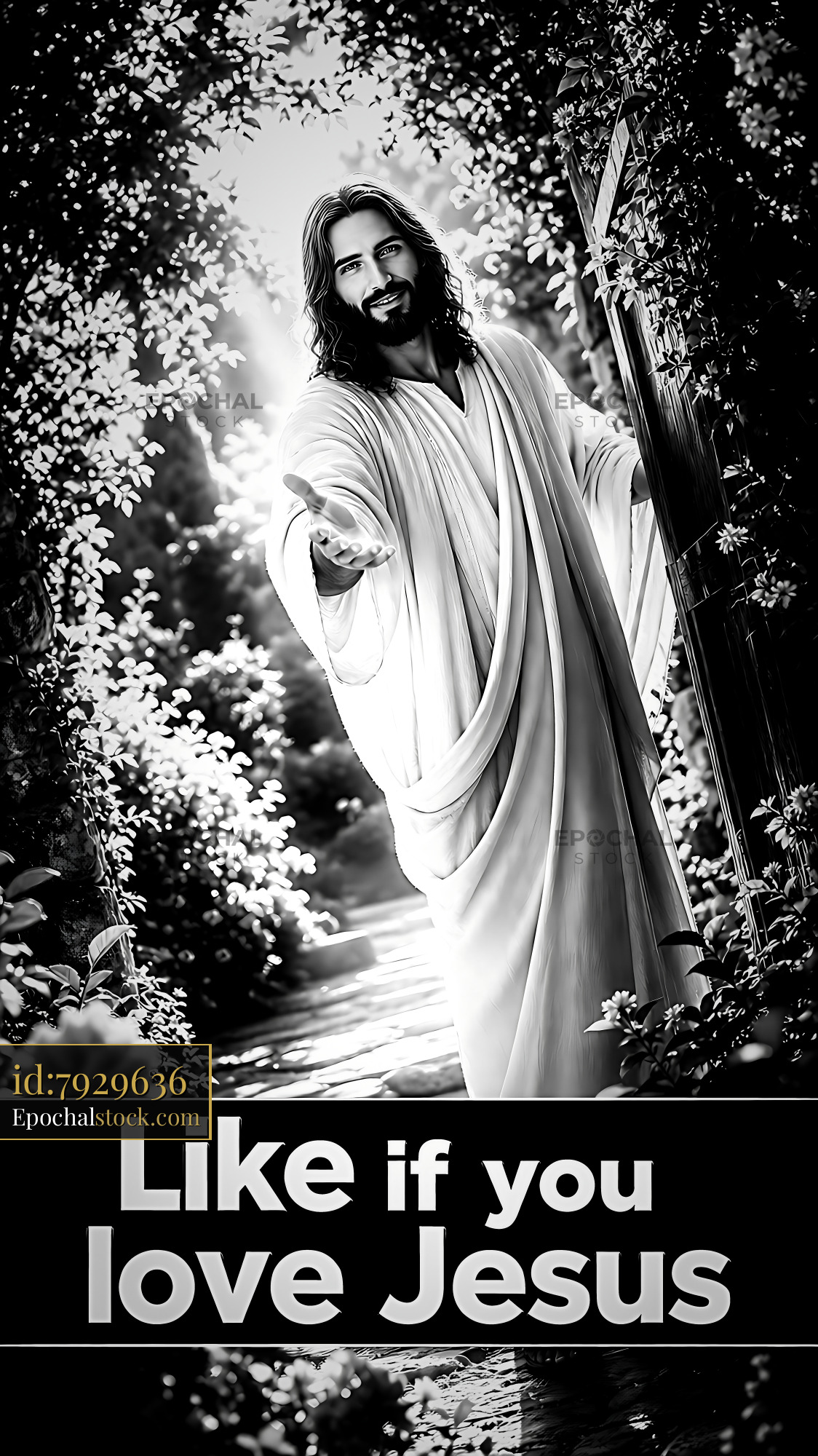
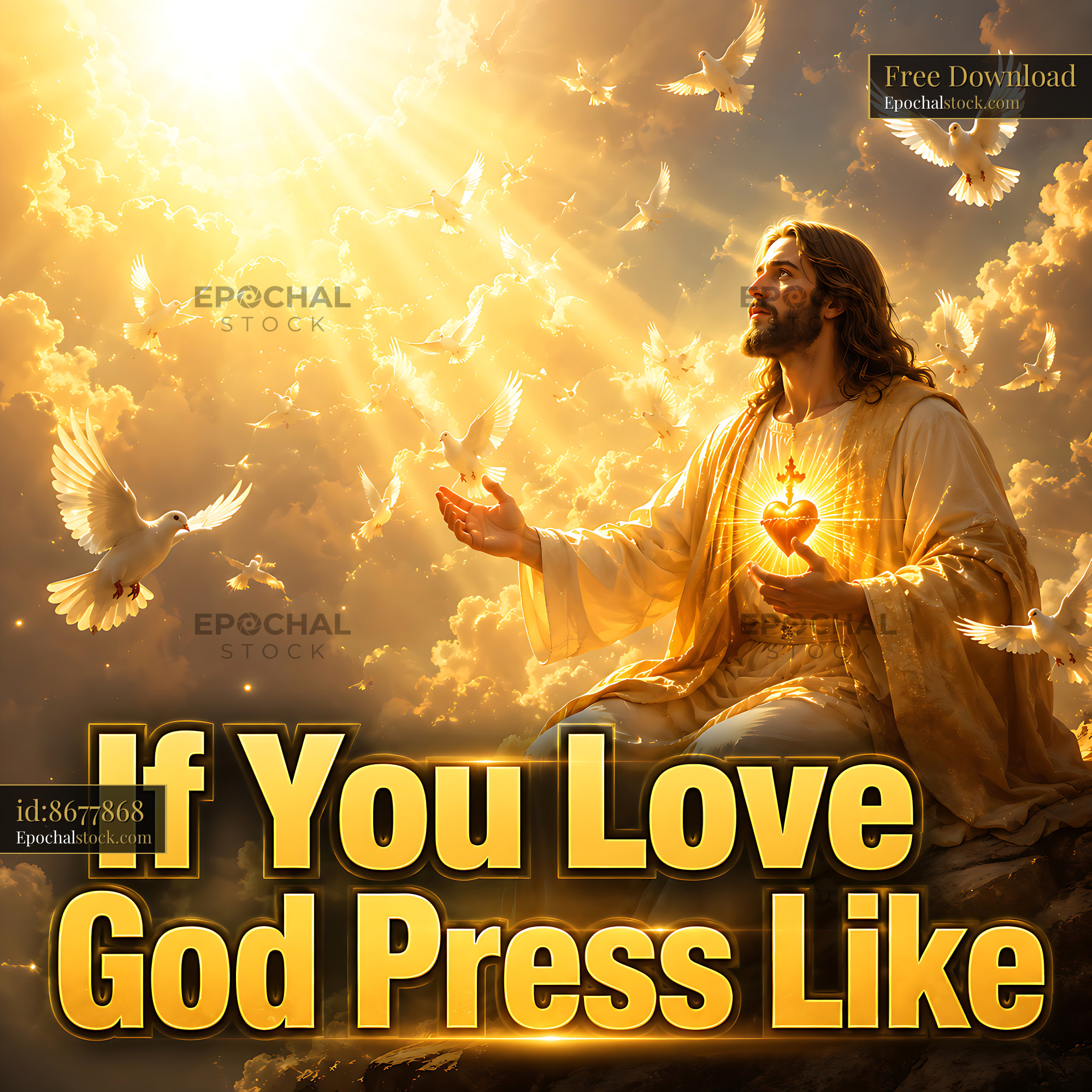
Three rules for daily use. First, choose images that match the content, never mere decoration. Second, remember that most printed parish newsletters come out in black and white: an image only earns its space there if it survives grayscale, meaning strong contrast and enough dark area to stand out from the text. Test it by printing the page once in b/w before the whole run; a washed-out gray rectangle is worse than no image. High-contrast motifs (a figure against bright light, a boat under storm clouds) convert well; soft pastel scenes usually don’t. And third, credit your sources cleanly. With a serious stock provider that’s one line of text, done.
Doing More With Less: Small Congregations, Firm Faith
Shrinking membership, less church tax, pastorates merged across parishes. Conditions have gotten harder for nearly everyone. The obvious reaction is discouragement. The better one is a question a superintendent from the Wendland region put this way: what are we, as the congregation in this place, good for in God’s name?
Whoever answers that question honestly will cut things. Good. A congregation of 400 doesn’t have to sustain seven circles, four festivals, and three choirs when three of them run on duty alone. Concentrating on what genuinely feeds faith — worship, one or two small groups, one diaconal project, reliable communication — makes a small congregation spiritually denser, not poorer.
And there’s this: shared hardship binds. Congregations that speak honestly about their situation and bring members into the questions about the future often see an activation that never showed up in the fat years. The upheaval opens room for people’s own ideas and new projects. Provided the leadership invites them in instead of administering the shortage.
From the Jesus collection


A boat in the storm, light breaking through: no motif fits a congregation in lean years better. The night scene on the right is native black and white — it prints crisp in any b/w newsletter without conversion. 342 biblical images, licence-clear, with a free tier.
Browse the Jesus collectionFrequently Asked Questions
How long until a congregation changes noticeably?
Count in years, not months. A small group carries after half a year, a changed worship culture needs two to three years, a generations project takes a full confirmation cohort. Reliability decides: better to hold one format for ten years than to launch something new every January.
What if nobody wants to join in?
It’s almost always the way of asking, not real disinterest. Replace open calls (“who can help?”) with personal, limited requests to specific people. And begin with two instead of twelve. A small start isn’t failure; it’s the normal case.
Does every congregation need social media?
No. A well-kept newsletter and a current website reach more people in most parishes than a neglected Instagram channel. Social media pays off only when someone on the team genuinely can and wants to run it. Otherwise you bind energy without effect.
Which Bible passage describes congregation building best?
Acts 2:42–47 works as the short formula: teaching, fellowship, breaking bread, prayer, and the radiance that grows from them. Add 1 Corinthians 12 (the congregation as one body with many members) and Ephesians 4:11–16 (growth through everyone’s gifts).
Can we simply publish photos from the parish festival?
No. Recognizable people must consent as a rule, and for minors the guardians must, whether it’s the newsletter, the website, or social media. For mood images without identifiable people, licence-free stock imagery is the legally safe alternative.
Conclusion: Strengthening Faith Is Relationship Work
A congregation grows firm in faith where people meet: in prayer, in the living-room small group, between the generations, in service to a neighbor. Structures and communication are the vessels for that. Important, but serving. If you want to start tomorrow: ask three people personally and invite them to six evenings with the Gospel of Mark. The first step needs nothing more.